
San Carlos City Directory Collections
The verified San Carlos city directory trail has a clear Polk spine and several local reference stops. R.L. Polk and Company published Redwood City directories that included San Carlos and nearby Peninsula communities. The 1953 volume is digitized with a separate alphabetical San Carlos section. The San Mateo County Historical Association holds telephone and city directories within a large book collection, but its online page does not promise a complete run. Exact years beyond the confirmed volumes should be requested from staff.
| Collection | Years | Where Held | Access |
|---|---|---|---|
| Polk's Redwood City Directory | 1941-42 | SMCHA and historic-resource citations | Ask archivist to verify shelf copy |
| Polk's Redwood City Directory | 1950 | SMCHA shelf inquiry | Request a local San Carlos section |
| Polk's Redwood City Directory | 1953 | Golden Nugget Library digitization | Alphabetical San Carlos section online |
| Polk's Redwood City Directory | 1954 | SMCHA shelf inquiry | San Carlos included with neighboring cities |
| County directories and telephone books | Exact run unconfirmed | San Carlos Library | Ask reference staff for a shelf check |
| Historical Association book collection | 1830-present archive span | SMCHA reading room | Appointment and advance request |
These are collection claims, not a promise that each volume is digitized or on an open shelf. Start with a year and ask for the San Carlos section. Staff can identify the publisher, edition, call number, and access condition before a citation is made.
San Carlos Library and Museum Desks
The San Carlos Library at 610 Elm Street is the first reference stop for newspapers, directories, yearbooks, genealogy databases, and orientation. The accessible branch page gives the phone, email, and services, but it does not enumerate exact San Carlos or Polk shelf runs. Ask the librarian at 833-937-7625 or sancarlos@smcl.org rather than assuming a volume exists.
The Museum of San Carlos History at 533 Laurel Street holds letters, photographs, personal artifacts, local publications, and historic downtown material. Saturday hours are 1 to 4, with weekday visits by appointment and a December closure. The museum's collection story begins with the San Carlos Villagers in 1949, and the Villagers became museum docents in 1981.
The San Mateo County Historical Association archive spans 1830 to the present and includes books, clippings, ledgers, letters, manuscripts, microfilm, newspapers, directories, and more than 300,000 photographs and negatives. Reading-room visits are by appointment on Tuesday, Friday, or Sunday. Request at least two days ahead at 650-299-0104 and ask for the Archivist. Reproductions are fee-based, and construction may affect access.
The Historical Association archive capture shows why a city directory search may lead to a reading room rather than a search box.
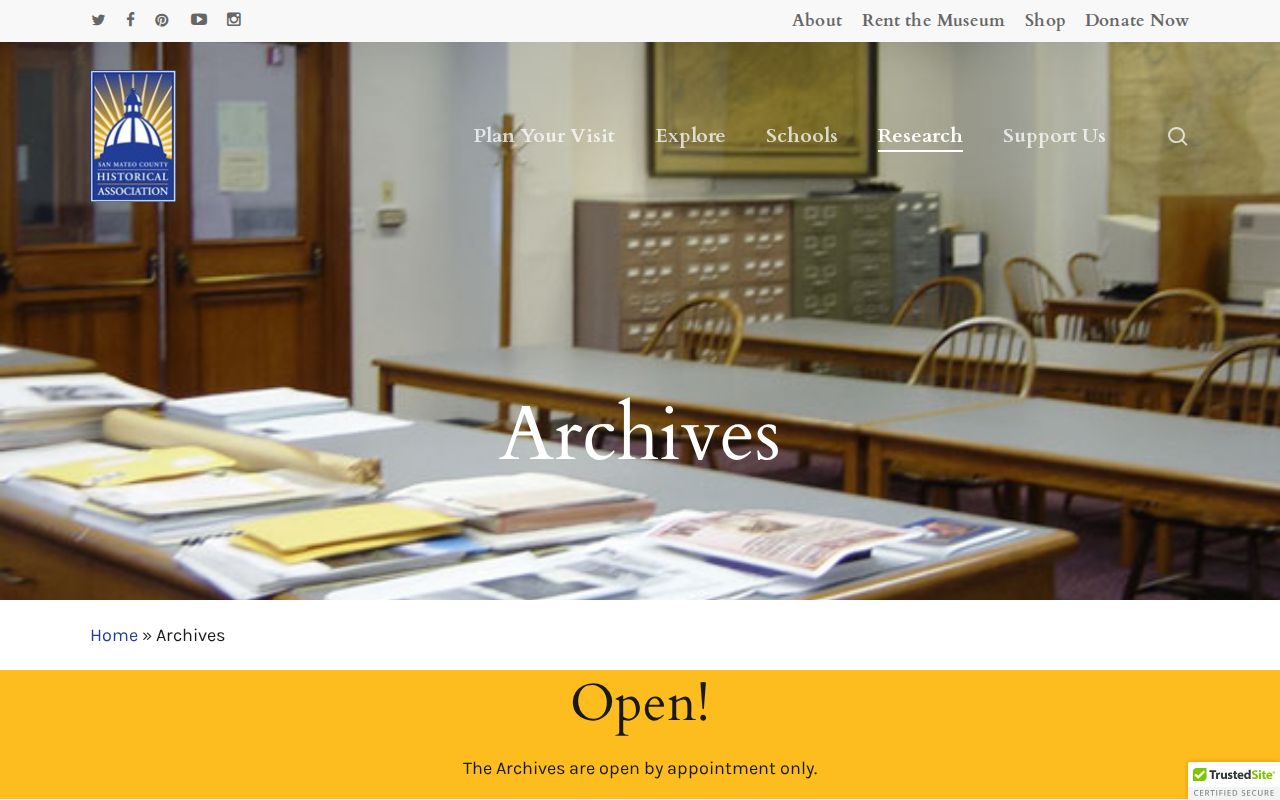
Use the archive as a provenance check. A catalog record, shelf year, or box reference gives a later researcher a way to repeat the search.
San Carlos Polk Years on the Shelf
The 1941-42 Polk title names Atherton, Belmont, Emerald Lake, Menlo Park, San Carlos, White Oaks, and Woodside. The 1950 and 1954 titles include San Carlos and Redwood City rural routes among their listed areas. The digitized 1953 index provides the cleanest online entry point because it separates the San Carlos alphabetical section from the Redwood City householders section.
An advertising page in the 1953 volume says R.L. Polk kept a “CITY DIRECTORY LIBRARY” at the Redwood City Chamber of Commerce on Middlefield Road at Jefferson Avenue. That detail is a useful research quirk: the publisher itself maintained a local reference set. It also explains why a shelf inquiry can find an edition that a general web search misses.
The Museum of San Carlos History has historic downtown images from the 1940s through the 1970s. They can support a directory clue when a person ran a shop on Laurel Street or San Carlos Avenue. Business evidence is context, not proof of a home address.
The Museum of San Carlos History collection gives the city directory history a physical setting.
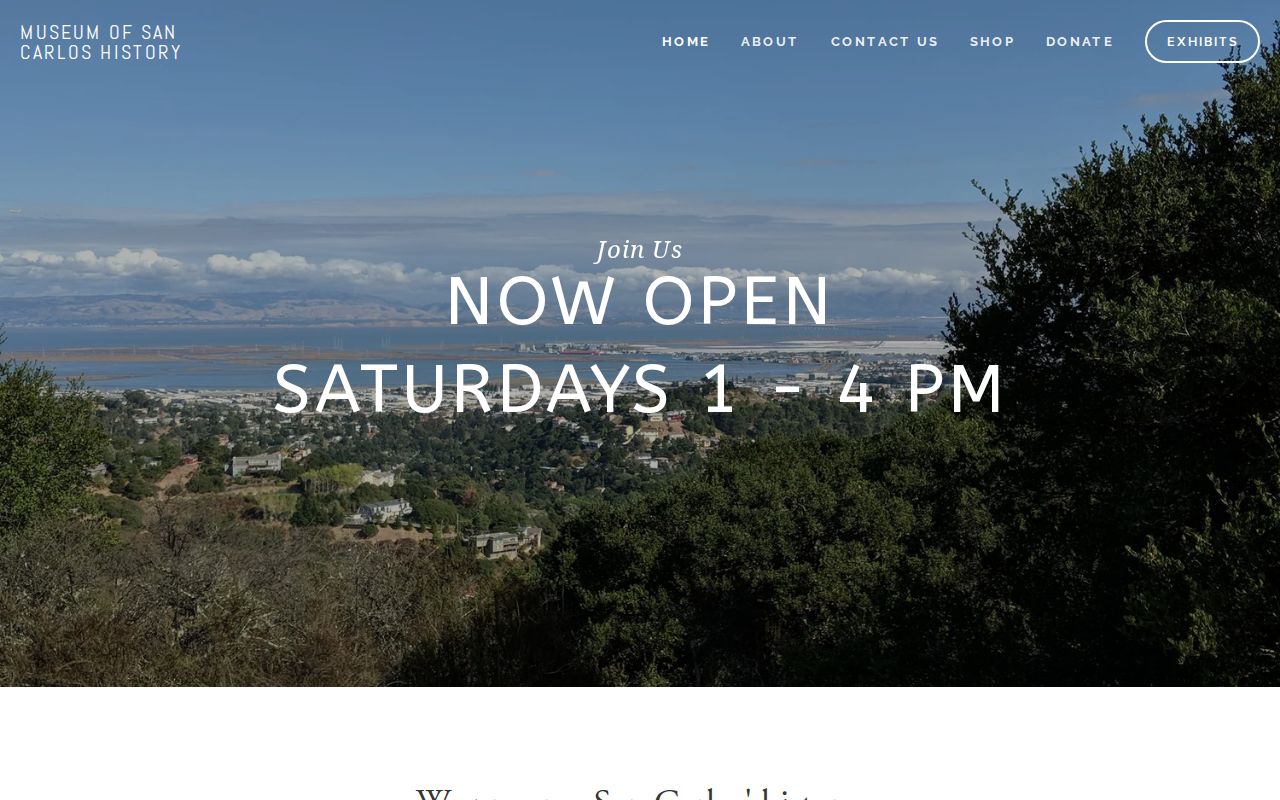
Record the image caption, collection name, and date with the directory entry. That small discipline keeps local color from turning into an unsupported resident claim.
Reading a San Carlos City Directory Entry
A San Carlos city directory entry is compact. The 1953 pages are alphabetical and can use a surname, given name or middle initial, spouse in parentheses, honorific, occupation, employer, residence marker, and address. Ditto marks can repeat a surname. One inspected line pairs a resident with a spouse and an address on Harrison Avenue. Other lines show a teacher at Hoover School or a credit manager tied to an employer.
The entry inventory below describes what the inspected pages actually show. It does not add an owner or renter mark; no such symbol was verified in the local sample.
| Name line | Surname, given name, middle initial, honorific, or spouse notation. |
|---|---|
| Household clue | Spouse in parentheses or a widow notation such as “wid.” |
| Work clue | Occupation and employer, for example teacher, credit manager, or school. |
| Residence marker | “h” for home or householder; “r” for resides or rooms. |
| Address | Street number and abbreviated street name. |
| Abbreviation key | Terms such as jr, tchr, Sch, and stereo formn need expansion. |
- Householder index
- An alphabetical list of people or homes used to locate an entry.
- Criss-cross directory
- An address-first reference that may list a street number, occupant, phone, or vacancy.
- Abbreviation key
- The publisher's guide to short forms used in names, occupations, addresses, and residence marks.
- Index versus image
- An index points to a record; the page image supplies the wording that should be cited.
A widow marker can bridge a directory line to an obituary or probate file, but it is a lead. Verify the date and identity in the responsible record.
San Carlos Address Abbreviations and Roles
Short forms carry more meaning than they first appear to. “h” points toward a home or householder entry. “r” indicates residence or rooms. “tchr” expands to teacher, “Sch” to school, and “jr” to Junior. An employer name can help separate two people with the same surname. A spouse in parentheses can connect one listing to a family group, while “wid” can suggest a later obituary or estate search.
Do not turn an occupation into a conclusion about where a person lived. A 1953 directory line can describe a business employee, school worker, or shopkeeper while the address is the only residence clue. Compare the same surname across nearby years, then use deeds, the census, or an obituary to test continuity.
For a modern address or parcel, use map and deed records first. A city directory is the historical collection layer, not a replacement for current parcel evidence.
The San Carlos City Directory in Reverse
A reverse San Carlos city directory starts with a street and numbered address instead of a surname. That format can reveal a listed occupant, telephone entry, or vacancy when the name is unknown. The local reverse-directory run is not published in an authoritative online catalog. Ask SMCL or the Museum for exact years, the street sequence, and the abbreviation key. The Historical Association's archive can confirm whether a telephone or city directory is in the reading room.
Use a reverse volume with a map or deed, not by itself. Street labels and numbers can shift. An address line may also reflect a business or an unlisted household. Capture the full street heading, page, address, name, phone field if present, and year so that another record can be compared.
A reverse entry is most valuable when it makes a surname search possible. Once a likely person is found, a modern record check can use stable document, case, entity, or license numbers rather than a name alone.
Trace Family History with San Carlos City Directories
City directories work well as year-by-year snapshots. Pair a directory line with the nearest public federal census, then use a deed, newspaper, obituary, or probate record to explain a move. NARA's 72-year release rule makes 1950 the latest public name-level federal census. San Carlos incorporated in 1925, so earlier households may appear under township or unincorporated San Mateo County labels.
- Write down the target surname, given names, spouse clues, street, occupation, and the first known year.
- Check the 1953 digitized Polk section or request the nearest confirmed shelf year.
- Record the exact entry, abbreviations, page, and any neighboring surname that may be family.
- Compare the 1940 or 1950 census household, allowing for changed street labels and ages.
- Use the Recorder, newspaper, obituary, or probate index to explain ownership, death, or relocation.
The National Archives 1950 census guidance provides the release context. SMCL genealogy resources add branch-only Ancestry Library Edition, remote HeritageHub for obituaries, and remote HeritageQuest for census and related collections. FamilySearch's San Mateo County collection adds browseable 1851-1991 county images and indexed marriage intentions.
Pairing dates matters more than collecting names. A family can appear under an initial, a spouse's name, or a changed street number. Treat every match as a hypothesis until at least one independent record supports it.
Historic Downtown San Carlos Business Leads
The Museum's historic-downtown imagery covers Laurel Street and San Carlos Avenue businesses from the 1940s through the 1970s. Those images offer a human-use lead when a surname appears in a directory with an employer or shop address. The city developed an electronics-era documentary trail after Dalmo Victor opened a plant in 1944 and Eitel-McCullough followed. A 1950 directory occupation can therefore help distinguish a newcomer from another person with the same surname.
Use business clues as a bridge to a directory page, newspaper notice, entity filing, or obituary. Do not treat a shop address as a home. The Museum's letters, photos, artifacts, and local publications can add context, but the collection's provenance and date should stay visible in the citation.
The digitized-directory search can surface related volumes, but each item needs title, year, geographic scope, and page verification before use.
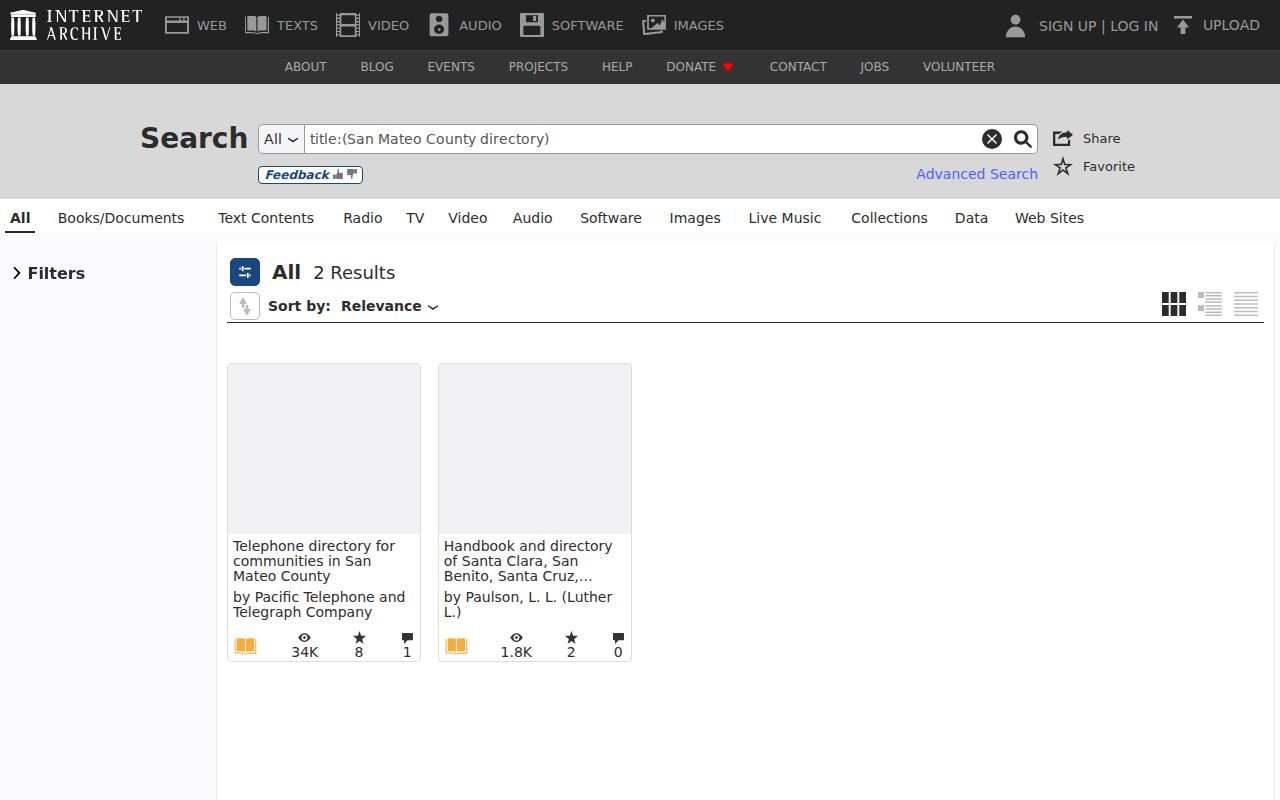
The digitized-directory search result is a discovery layer. Cite the actual directory page and publisher when the item is opened.
San Carlos Villagers and the 1923 Building
The San Carlos Villagers began collecting local letters, photographs, artifacts, and relics in 1949. The Museum later became a docent home in 1981. Its building history is part of the record geography: a 1923 volunteer firehouse and City Hall was demolished, reconstructed by the Lions Club in 1970, dedicated in 1976, and completed and gifted to the city in 1981. That story explains why a directory question may involve a museum catalog, a city file, and a newspaper at once.
The Museum also frames the city's electronics era and historic downtown. A local history query can ask for a surname, street, business, school, organization, or photograph subject separately because donated descriptions may not use today's geographic labels.
Catalog the source before drawing a family connection. The PastPerfect catalog is a discovery layer for the Association; an appointment can reveal the physical item and its restrictions.
The SMCL genealogy resource capture makes the local archive more than a list of titles.
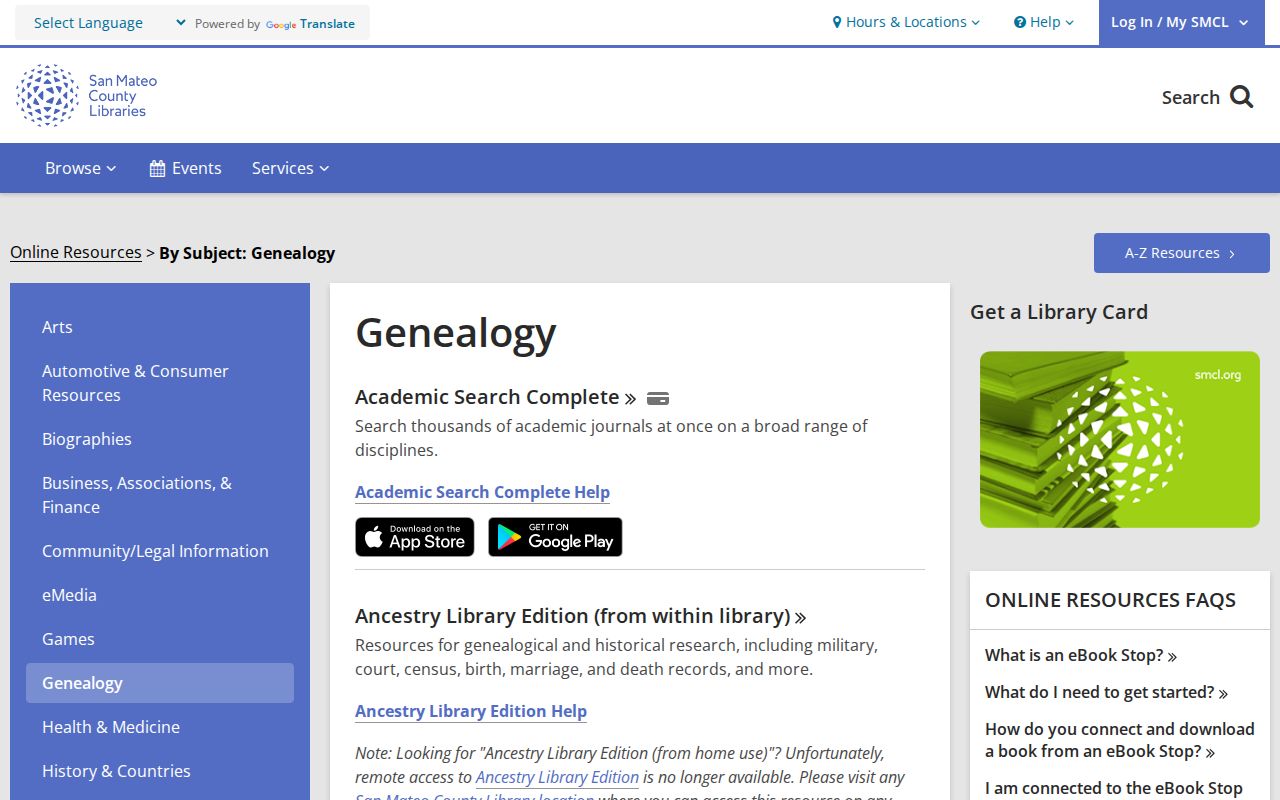
A targeted surname or address request is more useful than asking staff for an unbounded list of everyone connected to a street.
Ask for the San Carlos Shelf Run
Some of the most useful city-directory facts remain a documented gap. No authoritative online source supplied a complete first and last year, a full reverse-directory run, a San Carlos-specific Sanborn sheet list, or a digitized sample beyond the verified Polk material. The responsible next step is a specific shelf request to the Library or the Historical Association.
Give staff a target surname, street, date range, and the kind of record sought. Ask whether the item is a city directory, telephone book, reverse directory, yearbook, newspaper, microfilm reel, or local-history file. Note whether copying, photography, or an appointment is allowed. That keeps the San Carlos city directory record honest and makes the later family-history trail repeatable.
A missing online volume is an access gap, not proof that the volume never existed. A listed person is a dated clue, not proof of every part of a household story.